

Hello Friends,
Have you ever walked into a room of strangers, felt out of place, and wanted to leave? Only to meet someone new with whom you seemed to resonate?
Well, it appears there is a scientific explanation for this.
It’s called Interpersonal Synchrony.
Psychologists have had this particular kind of meet-cute on their radar for years. Since at least the 50s, apparently, social scientists have been going to parties and trying to understand why they usually go home alone when others find lifelong friends.
Nah, it’s not that bad, but it’s a happenstance that they’ve explored for a while.
It’s due to synchrony—a state where two people physiologically mirror each other in subtle ways: an empathic nod of the head, a grin met with a grin, a slight common acknowledgement of the drunk guy in the corner, a telepathic blurt of the same word—jinks!
And when this happens, chances are that two strangers will start to get along like pals.
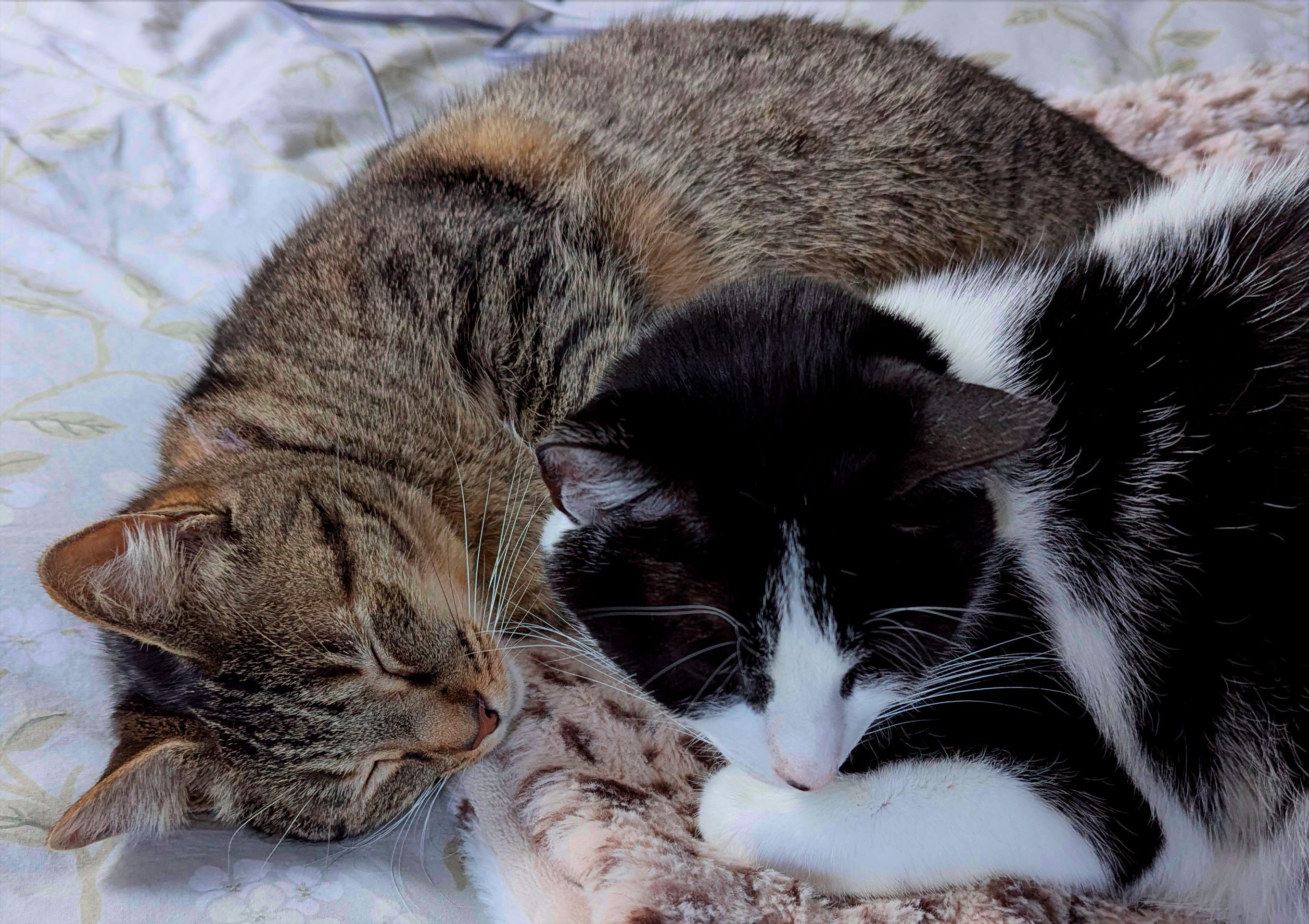
Under the spell of interpersonal synchrony, other, more physiological things happen, too.
In these moments, each person’s heart beats together, their gestures begin to match, and their faces can blush similarly. People begin to walk in cadence, take sips of water in unison, glance at the same movements on the periphery.
interpersonal synchrony … is defined as instances when two or more people perform actions almost at the same time (i.e., the movements are overlap or congruent within the time frame of the entire process), and they perform in identical, similar, or connected forms.
https://www.sciencedirect.com/science/article/pii/S0001691822000282
Crowds of people can also synchronize.
For example, when they are singing together at a concert or cheering in a stadium as the Pats win and are going to the Super Bowl.
Like most things with humans, there are evolutionary roots to this behavior. Our ability to synchronize with others paves the way for all kinds of beneficial things—procreation, compassion, and a sense of social safety.
We hang out in groups, form allegiances, and protect each other (usually, and on a good day).
It’s often an initial step in a long-lasting relationship.

For fear of being too cheerful, I would be remiss if I didn’t mention the dark side—someone can manipulate another by exploiting interpersonal synchrony.
By actively employing synchronic expressions, a person can establish a connection and evoke sympathy to influence others to perform actions they might not normally do (or feel) if there wasn’t a contrived attachment.
Not necessarily hypnosis, interpersonal synchrony offers the unscrupulous (corrupt) individual a way in. A stranger who walks up and subtly mimics someone can pull the other person into synchrony without them realizing it, thus creating a false sense of connection.
Evil or otherwise, perhaps this can reveal a person’s unexplainable charisma or magnetism: they are just great at reading a crowd and finding people to bond with.
A handshake, a mirrored slight smile and tilt of the head, and you’re hooked. You feel all warm inside, having met another human who gets you.
The next thing you know, you’re knocking off a liquor store or agreeing to babysit a 180-pound Great Dane in your studio apartment for the month of January.
Of course, this could explain why some people wear face coverings—they don’t want to risk forming a connection or appear sympathetic.
I say, “Let them see your face.” They might smile back, and you can form a genuine friendship.
And then you’re both happily skipping down the road together, in step.
Happy reading and happy writing,
David