

Hello Friends,
Many mornings, after I wake, if there are no alerts on my phone, I tend to do a quick shuffle through a few news websites: CNN, BBC, Boston.com, Ground News, Christian Science Monitor, The Guardian—mostly ones I think might not be too one-sided. I’m just looking to see if I missed anything interesting overnight—sports highlights, UFO sitings, celebrity deaths (I’m getting to that age) while I shake the sleepiness off. Nothing political.
If I see something that intrigues me, I’ll click the link to do a quick scan of the story, just looking for the facts.
Over the last month, I have noticed that every one of these websites that I frequent for these quick blasts of news has put up a paywall between me and the story, asking me to subscribe.
This recent assault from all these news sources really ticks me off—I already have to wade through the dumb, intrusive video ads to get the info.
For my day job and much of my non-day-job activities, I find myself online a lot, even though I abhor and refuse to doom scroll or engage with social media.
I will engage with you if you comment on my Substack newsletters (hint, hint or signup for my soon-to-be-released book coaching program...more hints)—I like most human-to-human interaction.
I entered my career before the Internet was a thing, and as soon as it became the way to work, I relied on the connected world for most of my career. I started surfing the web in the earliest days, the mid-1990s. To do so, I had to build a piece of software called Mosaic, developed by the “National Center for Supercomputing Applications (NCSA).”
The internet was originally by and for scientists, researchers, and academics—folks who just wanted to share their discoveries and engage in discussions. It was a free and intelligent way to become and stay smart. That is pretty much how I use it today—ideas and research for my writing.
It was just a tool that was never expected to become our portal to society. It was the business and marketing folks who came along and figured out (and continue to figure out) ways to get people to spend money on it and keep people enslaved to it.
My idealized online life had been going along relatively fine and dandy until about a month ago (it’s been a good run—30+ years) until I started noticing all of my free information sources charging access fees, both websites and apps on my phone, and locking me out of information, unless I subscribe.
Don’t get me wrong, I willingly pay for science (MIT Technology Review and New Scientist magazines) and art subscriptions (COSMOS Gallery) because I like to support these things, and in our society, these institutions seem to be constantly under attack.
And, importantly, they don’t sell my subscription data to companies that want to exploit that data.
Also, I actually do send The Guardian $5 a month and have been for over a year. And I pay around $30 a month for a digital subscription to my local paper (mostly to confirm every morning that I’m not in the obituaries). Additionally, I send money to Wikipedia because I use it a lot for this newsletter.
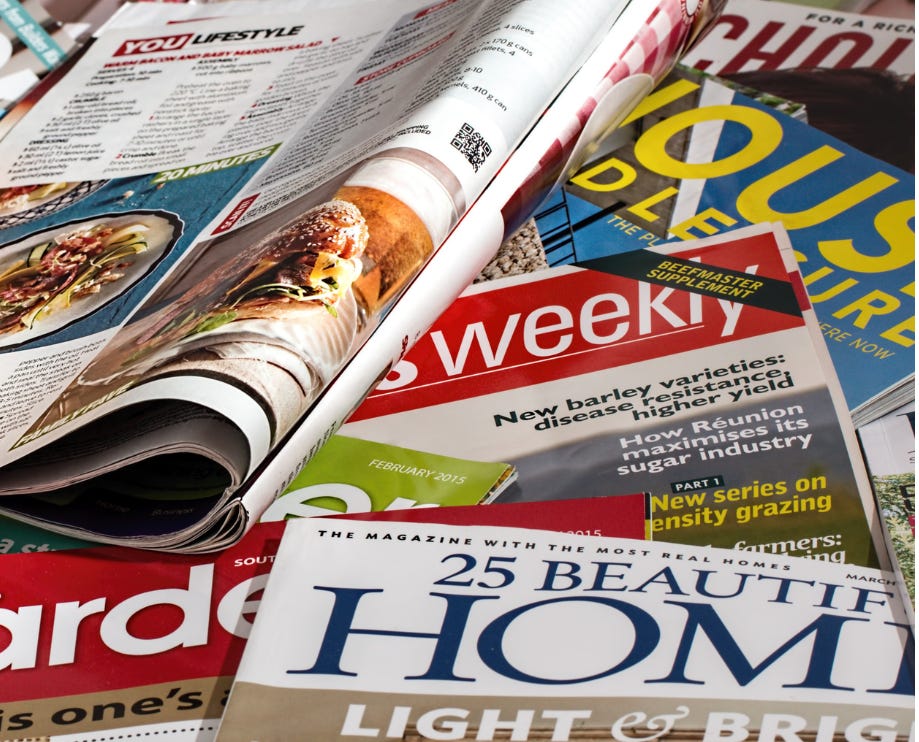
Back in the olden days, before the internet, people subscribed to print magazines. The truth is that those periodicals never needed your subscription dollars to support their operations. They made way more money from the companies that paid to advertise on those pages.
Print Magazines are/were targeted at specific viewers: cars, fashion, gardening. And publishers could sell those placements knowing that the eyeballs of the reading audience belonged to the same people the companies were trying to sell stuff to.
When I started my career, I was able to get a boatload of free computer industry magazines. All I had to do was fill out a postcard, answering a bunch of personal and professional questions, like “Do I make purchasing decisions for my company?”
I didn’t, but I lied because who doesn’t like free stuff?
Once I filled out a few of those, the floodgates opened, and I received free magazines for a decade (until those periodicals moved online and could do the same thing without actually having to pay for printing). Today, newsletters have replaced these periodicals.
“If you’re not paying for the product, you are the product.”
- The Social Dilemma
This quote is a few years old, and now, as exemplified by my rant today, we have become both the product and the payer. Apparently, media companies can’t make enough money from advertising (or they simply want more).
For example, before cable, satellite, and streaming services, broadcast television was free. To pay for this, media companies used commercials, sponsored shows (Mutual of Omaha Wild Kingdom), and product placements—all interlaced into the viewing experience.
Now, we pay for a basic streaming service that not only includes ads (often minutes of repeated commercials at the beginning of shows), poorly placed spots in the middle of programs, and promos peppered along the screen margins.
It is still possible to get free access to broadcast television, but it requires a special digital antenna and is not widely available (I don’t really receive any programming in my area).
With these non-zero basic subscriptions, media companies have gotten us to pay in two different ways: with our money and our time. And, to go even further, if you watch a program on the Amazon Prime streaming service, you can click on your TV remote during an ad to put that product in your shopping cart—every side of this transaction is designed to separate the viewer from their money.
A few years ago, consumers would cut the cord to pay for a service specifically to get away from commercials and merchandising.
This new experience of paying for the opportunity to watch commercials has been sold to us under the guise of “enhanced viewing.” I guess shit tasted better when the cook says it’s caviar.
Anyway, I’m getting sidetracked here. My point being, everything online sucks now. And everything is online.
Recently, to launch my book coaching business, I purchased an online program to support that venture (if you want help writing your book, reach out).
As I worked through it, they were continually trying to upsell me more services, not only in the main content of the course, but through several daily upsell emails.
I mean, is not buying the program enough? I have since quit that program and got a refund. I was told by their support staff that they were just trying to help me in every way possible. So, the course was not complete?
I am literally being overwhelmed in every facet of my life by people trying to sell me something.
This is what capitalism has become. This is what our economy has evolved into—a plethora of means to squeeze every possible cent out of consumers.

This uber-commercialization is being done to us rather than developing and growing our economy to provide national healthcare, basic income, free higher education and training, AI-proof employment, housing for all, free internet, etc.
It makes me not want to even try to build my business, to not attempt to help people with their writing and finish their books, because the whole business of business feels slimy and selfish.
Seriously, I struggle with this.
I know, I know… people deserve to get paid for their labor. I completely agree: there should always be an exchange of energy in positive interactions. Often, free equals poor quality. Anyone who’s had a relative work on their house knows this.
But I feel like there has to be a better way. Perhaps I am just being naive, as this is the world we live in. Suck it up, Buttercup!
In sales, there is a method called the sales funnel. It is a very specific means of moving customers through the buying journey, from passive window-shoppers to active, loyal (repeat) purchasers.
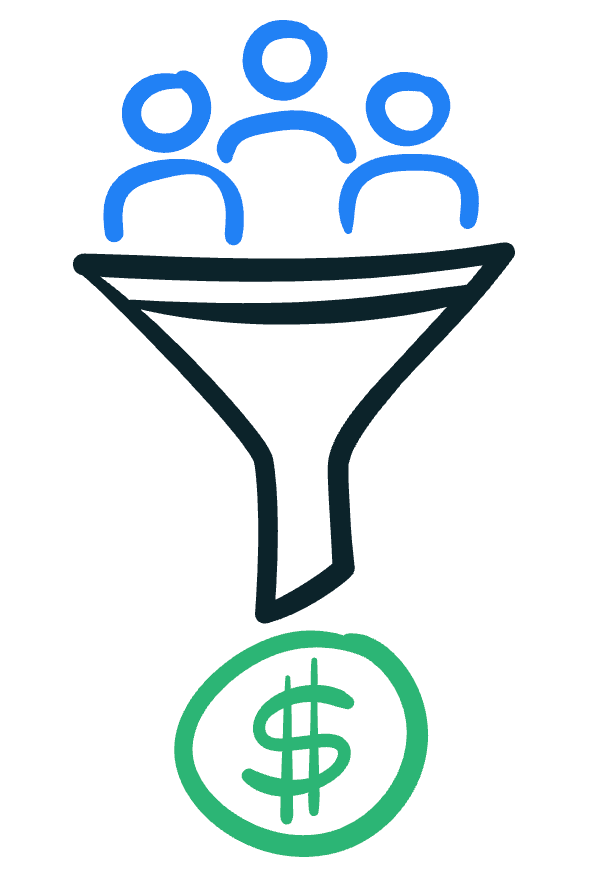
Every single action you do online is mediated by someone’s funnel:
You visit a webpage (or Facebook or Instagram) and see an ad (or influencer)
You click on something to wind up on a “landing page”
You consider signing up for a free trial for a subscription (that you might not be able to get out of)
You try to cancel or return only to have someone try to entice you with a lower cost or special deal
You become a customer at a reduced rate so that you can be harvested for future purchases (and hopefully not notice the upcharge when the service renews at the original higher price.
Newsletters like this are the top of the funnel (or meat grinder—”if you’re not eating the meat, you are the meat”).
At least this one is free. Today.
Happy reading, happy writing, happy consuming,
David
I agree! well said! finally, the people have a voice - and it’s you…